Research
Research
My research sits at the intersection of physiotherapy, health professions education, learning design, and emerging technology. It examines how educational innovations can be aligned with curricula, implemented sustainably, assessed appropriately, and translated into meaningful student and professional learning.
How the work connects
From preparation to clinical responsibility
The strands are not separate technologies. They form a learning pathway towards safer, more accountable professional judgement.
- Virtual realitySee, experience, and practise
- Artificial intelligenceReason, question, and challenge
- SimulationRehearse, receive feedback, and adapt
- Clinical placementTransfer learning and take responsibility
Technology prepares. Clinical experience makes the learning real.
Three projects in practice
Teaching Human Physiology with VR
- Teaching problem
- The inside of a cell can be difficult to picture from a diagram alone.
- My contribution
- I set up small-group VR exploration. One student wore the headset, one monitored safety, and the others guided the search using the mirrored iPad view.
- What happened
- Groups searched for structures such as the nucleus and mitochondria and finished with a short identification race.
- What remains open
- The race did not establish whether students could explain what the structures do or recognise them in another format.
Clinical Reasoning Chatbot
- Teaching problem
- An AI answer can arrive before a learner has screened for red flags or explained their reasoning.
- My contribution
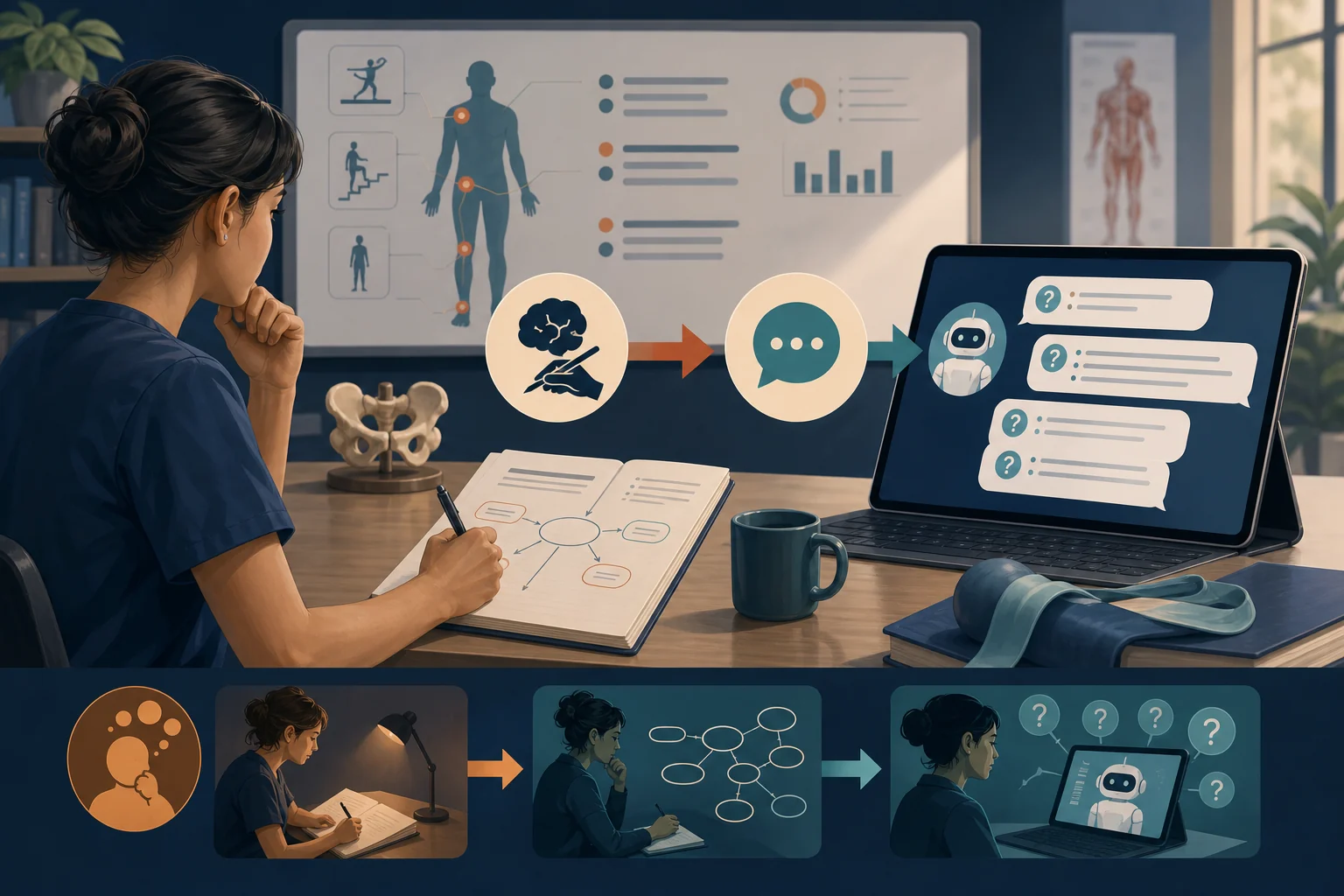
- I designed a staged dialogue that asks learners to explain their thinking before it offers suggestions.
- What happened
- The research pilot is in development. The public Skills Lab tutor is a separate service.
- What remains open
- The pilot has not established effects on clinical reasoning or transfer to practice.
Simulation in Health Professions Education
- Teaching problem
- Students may learn different things when they play the clinician, peer patient, observer or debriefer.
- My contribution
- I contributed to a rotation design with role preparation, focused observation and guided reflection.
- What happened
- Students rotated through the roles. Early accounts describe what they felt they could learn from each role.
- What remains open
- Analysis is ongoing. Effects on clinical competence and readiness have not been established.
Implementation in practice
Curriculum-integrated acupuncture VR
- Educational need
- Students need structured opportunities to connect anatomy, point location, procedural reasoning and safety.
- My contribution
- I developed and implemented a sequence covering theory, training, practice and assessment, with safety prompts and curriculum integration.
- Implementation evidence
- The application has been used by learners and generates practice and usage records. These support implementation review; they do not establish improved clinical competence.
- Next evaluation
- Continue evaluating usability, learning design and the relationship between virtual practice and supervised physical practice.
AI-supported clinical handover
- Educational need
- Learners need rehearsal and feedback when organising and communicating a clinical handover.
- My contribution
- I implemented a pseudonymised chatbot workflow in Year 3 simulation and reviewed learner interaction, performance and usage records.
- Implementation evidence
- The work informed review of learner performance, governance and usability. This simulation activity is distinct from the public website’s Skills Tutor.
- Next evaluation
- Refine the learning workflow, feedback and governance while maintaining educator oversight and protecting learner information.
Responsible AI in assessment
- Educational need
- A polished AI-assisted submission may conceal gaps in independent understanding.
- My contribution
- I retained AI-supported preparation and collaborative analysis, followed by a group presentation and structured randomised viva: any member may defend any substantive part, with common domains and criteria.
- Implementation evidence
- The design creates an additional opportunity to examine understanding. An unseen transfer component remains a proposed next iteration.
- Next evaluation
- Evaluate whether the assessment reveals reasoning, ownership and the ability to apply knowledge.
Funded educational development
Co-Investigator on two SFU Institutional Development Grants with a combined project value of HK$339,800. These are collaborative project budgets, not personal awards or evidence of learning gains.
2026 · IDG250204 · HK$194,000
Peer Patient and Peer Debriefer Roles in Physiotherapy Simulation-based Learning
A mixed-methods evaluation of learning and clinical practicum readiness.
2026–2028 · IDG250202 · HK$145,800
Interprofessional Simulation for Nursing and Physiotherapy Students
Evaluation of an interprofessional education simulation programme.
Research approach
Learning design before technology
My research follows a consistent logic: identify the educational problem, design the learning process, select technology only where it adds value, and evaluate what transfers into practice.
AI as a thinking partner
Students should reason first. AI can then question, challenge, and widen the discussion, but the learner must verify, revise, and defend the final judgement.
- Reason
- Question
- Challenge
- Verify
- Revise
- Defend
Practical design pathway
The VRILO pathway
VRILO is a practical seven-stage pathway for designing and implementing VR learning. It is presented as a developing design guide, not as a universally validated framework.
- 01Define the educational problem
- 02Specify intended learning outcomes
- 03Decide whether VR is appropriate
- 04Design the learning experience
- 05Prepare implementation and support
- 06Align assessment, access, and fairness
- 07Evaluate, refine, and plan for sustainability
Use the simulation debrief worksheet
Signature work
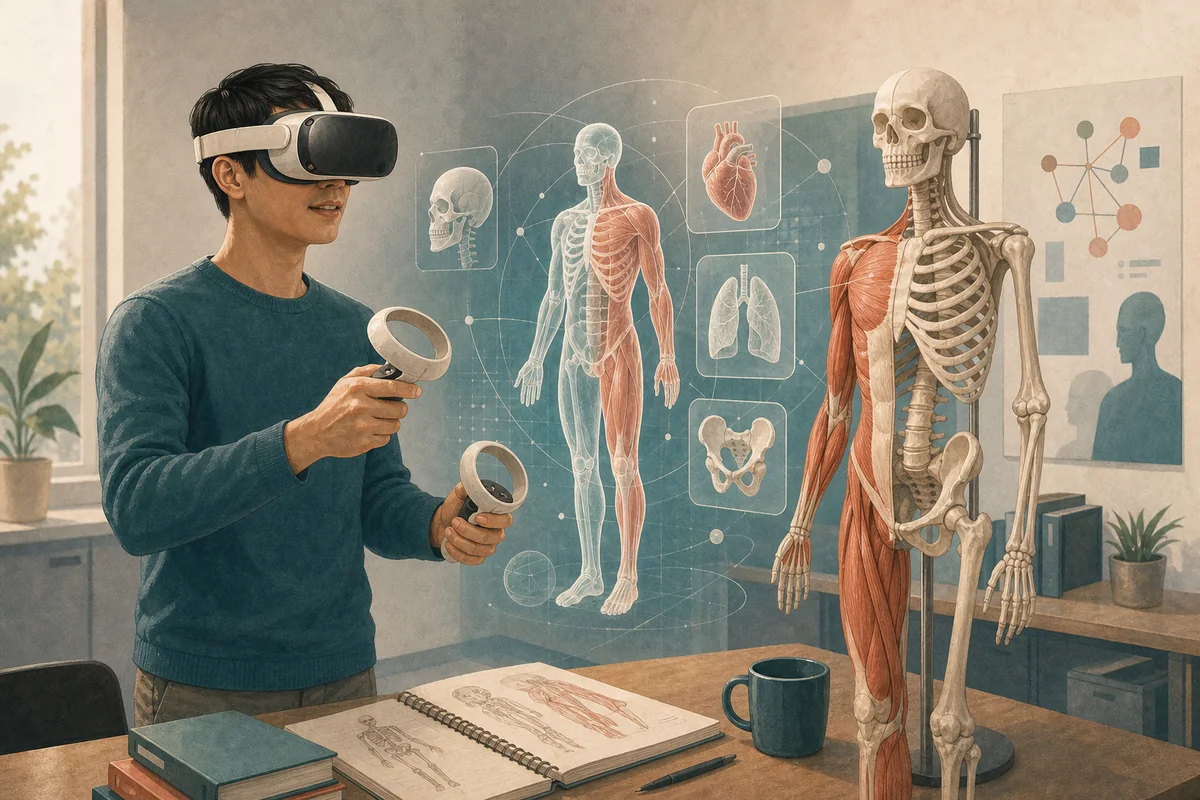
IMPLEMENTED · EVALUATION ONGOINGVirtual Reality Acupuncture
Turning a spatial and safety-sensitive skill into a structured cycle of preparation, practice, and assessment.
Contribution and evidence
- My role
- Educational designer and lecturer supporting development and curriculum integration.
- Available material
- The teaching page explains the curriculum and learning design. The VR application itself is not offered as a public download here. Explore the learning design
- What the evidence supports
- Implementation and learner use are evidence of delivery, not proof of improved clinical competence. Evaluation and curriculum refinement continue.
Students need repeated opportunities to connect anatomy, point location, safety, and procedural reasoning, but access to guided practice is limited by time, place, and supervision.
A curriculum-aligned VR application with training, practice, and assessment modes, supported by preparation and debriefing rather than treated as a stand-alone simulation.
Spatial orientation, anatomical relationships, procedural sequence, safety decisions, and explanation of technique.
Implemented learning application; continuing evaluation and curriculum refinement.
Connected thinking
Related writing
Signature work
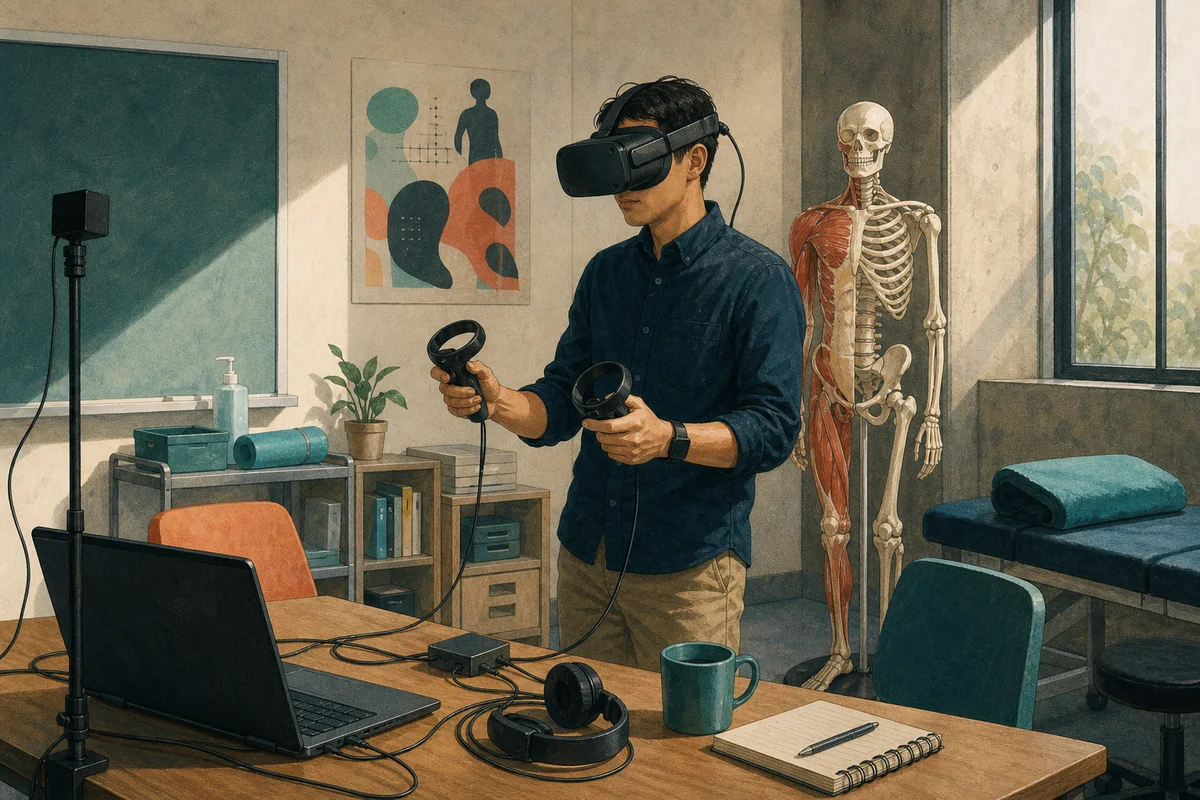
TEACHING RESOURCEAI Literacy for Health Professionals
Helping learners verify, disclose, question, and remain accountable for AI-supported work.

Using a chatbot is not the same as understanding hallucination, bias, privacy, verification, or professional accountability.
A developing sequence of curriculum prompts, reflective writing, and a short interactive knowledge check that makes responsible-use decisions concrete.
Source verification, privacy judgement, bias awareness, disclosure, appropriate task selection, and responsibility for final decisions.
Active teaching resource and curriculum-development theme.
Connected thinking
Related writing
Signature work
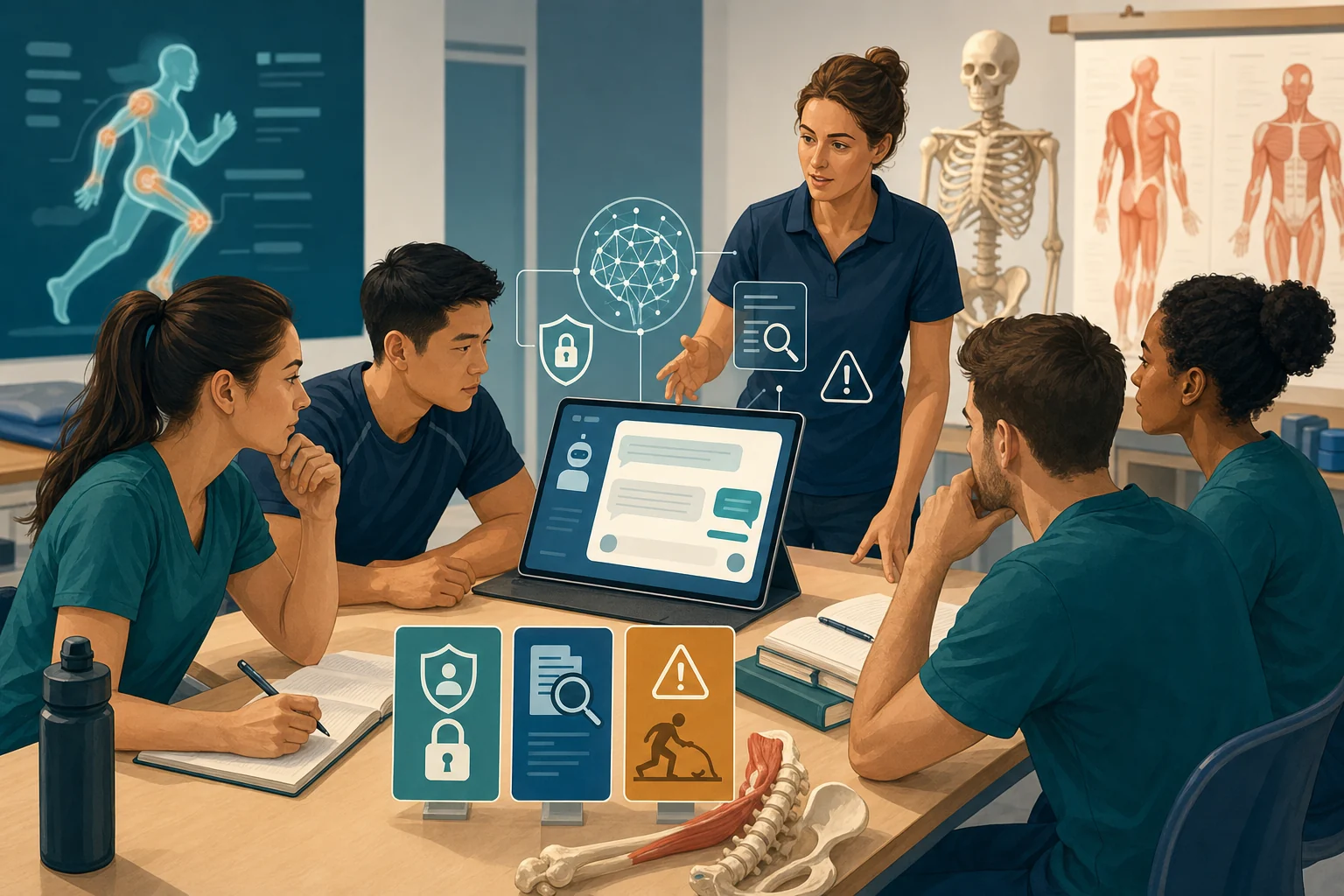
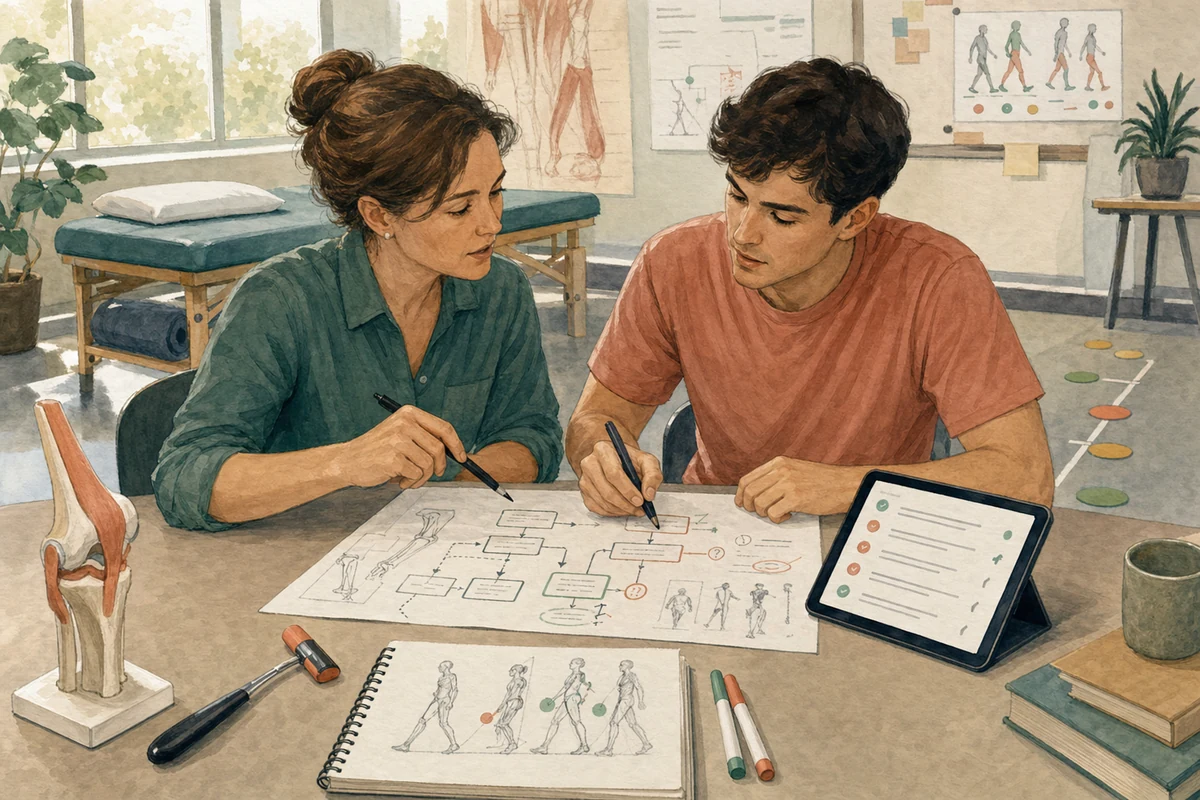
PILOTClinical Reasoning Chatbot
Designing AI to ask better questions before it offers answers.
Contribution and evidence
- My role
- Researcher and educational designer leading the pilot concept and learning design.
- Available material
- The linked reflection explains the reasoning-first approach. It is not a report of a completed effectiveness study or access to the research pilot. Read the reasoning-first approach
- What the evidence supports
- The research pilot is in development. The public Skills Lab tutor is a separate service; its availability does not establish the pilot’s effectiveness.
AI can produce plausible clinical answers before students have identified red flags, compared hypotheses, or justified a plan.
A pilot chatbot that prioritises safety screening, staged questioning, explanation, and reflection before suggestions are revealed.
Red-flag recognition, hypothesis generation, evidence use, prioritisation, explanation, and critical review of AI output.
Pilot study in development; no claims of effectiveness are made yet.
Connected thinking
Related writing
Signature work
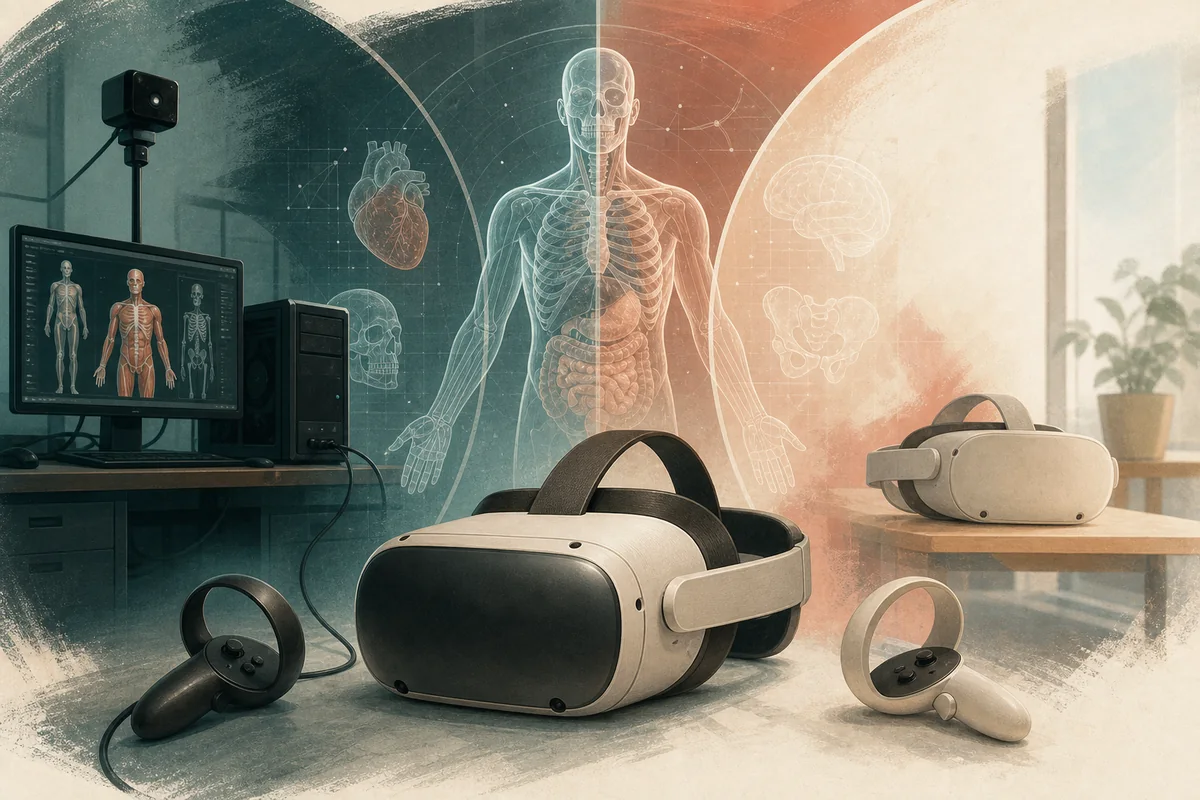
IMPLEMENTEDTeaching Human Physiology with VR
Using immersion to connect structure, function, movement, and clinical meaning.
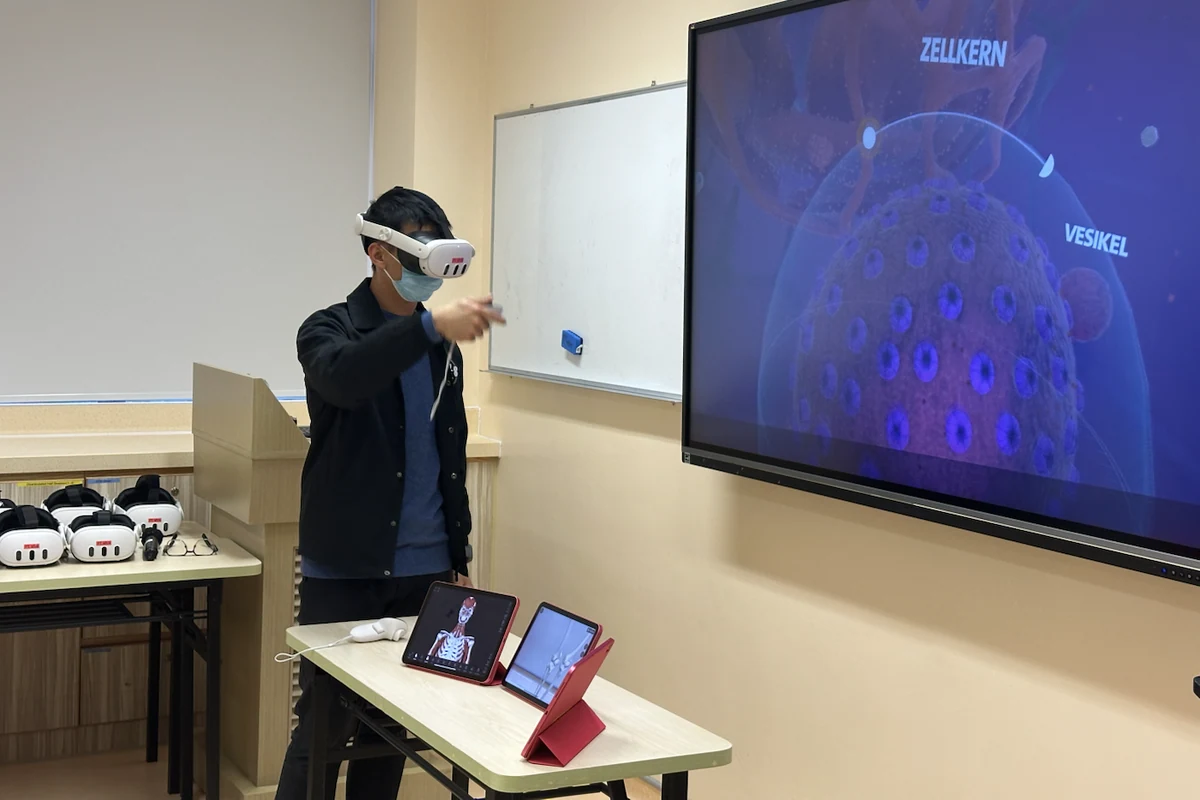
Dynamic physiological relationships can remain abstract when students encounter them only as diagrams, slides, or isolated facts.
Short immersive encounters embedded within a wider lesson: preparation, guided observation, case application, peer explanation, and debriefing.
Three-dimensional relationships, structure-function connections, observation, explanation, and transfer to clinical cases.
Teaching approach under iterative development.
Connected thinking
Related writing
Signature work
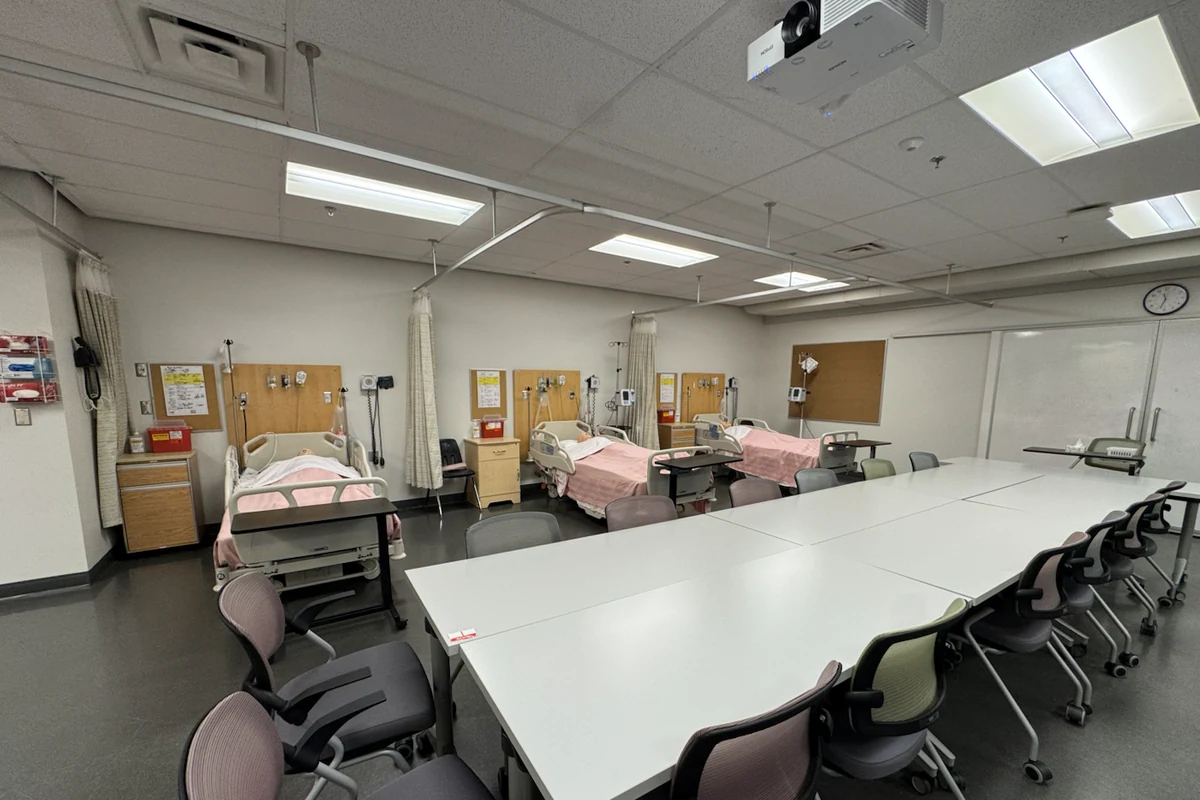
ONGOING STUDYSimulation in Health Professions Education
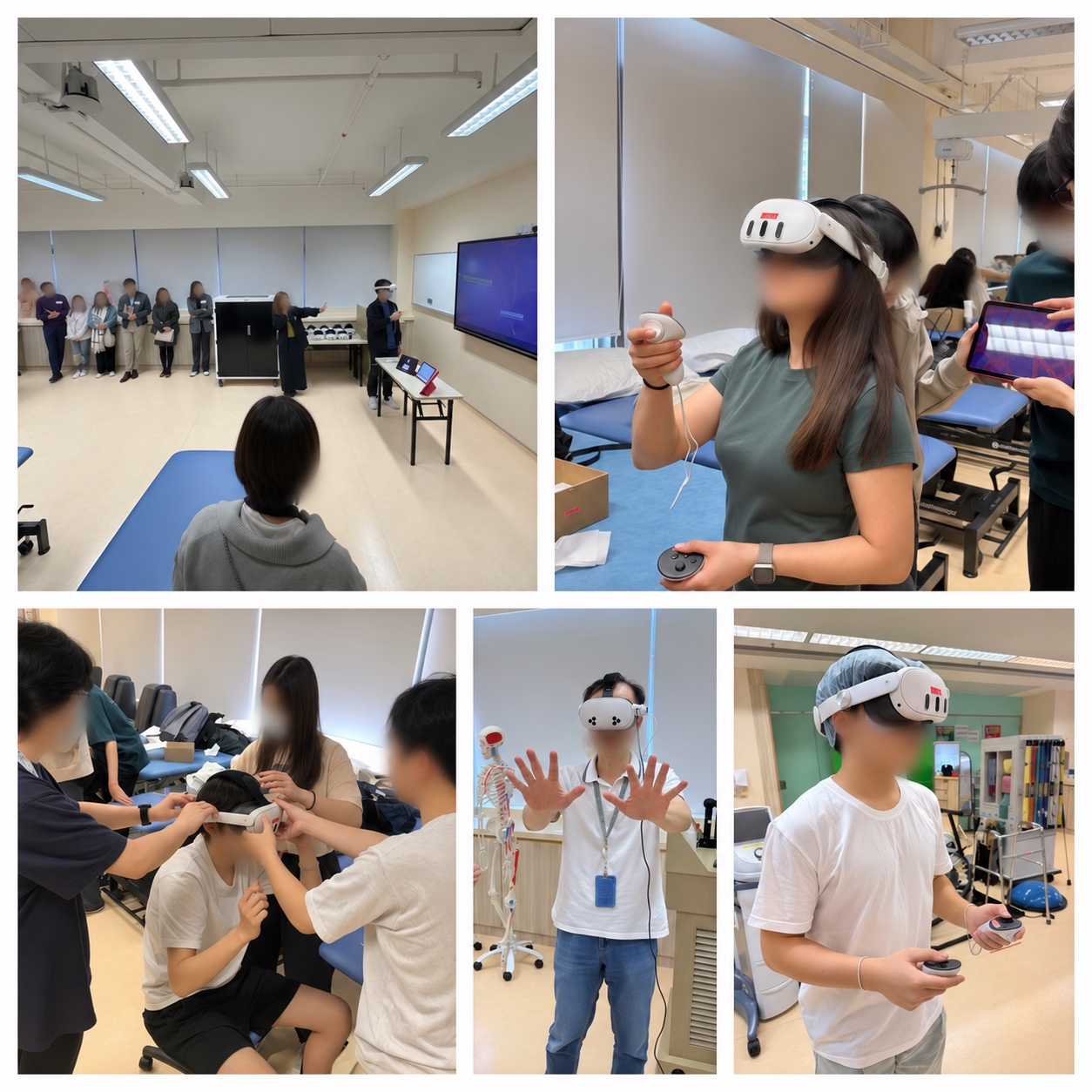
Exploring how different simulation roles may direct attention towards different aspects of learning.
Contribution and evidence
- My role
- Researcher and lecturer contributing to the role-rotation design and ongoing analysis.
- Available material
- The linked practice reflection introduces the Learner, Peer Patient, Observer and Peer Debriefer roles. Student records and unpublished research data are not shared. Read about the role-rotation design
- What the evidence supports
- Early student accounts describe perceived learning possibilities. Transfer to clinical practice and effects on competence have not been established.
Simulation learning is often discussed mainly in relation to the student performing as the clinician, while less is known about what students may learn as peer patients, observers, or peer debriefers.
A structured role-rotation model involving Learner, Peer Patient, Observer, and Peer Debriefer roles, supported by role preparation, focused observation, guided reflection, and educator oversight for clinical accuracy and psychological safety.
Early student accounts suggest different emphases across roles: clinical integration, patient-centred awareness, analytical distance, and feedback dialogue. These are perceived learning possibilities rather than confirmed effects.
Ongoing analysis and manuscript development; effects on clinical competence and readiness have not been established.
Connected thinking
Related writing
Signature work
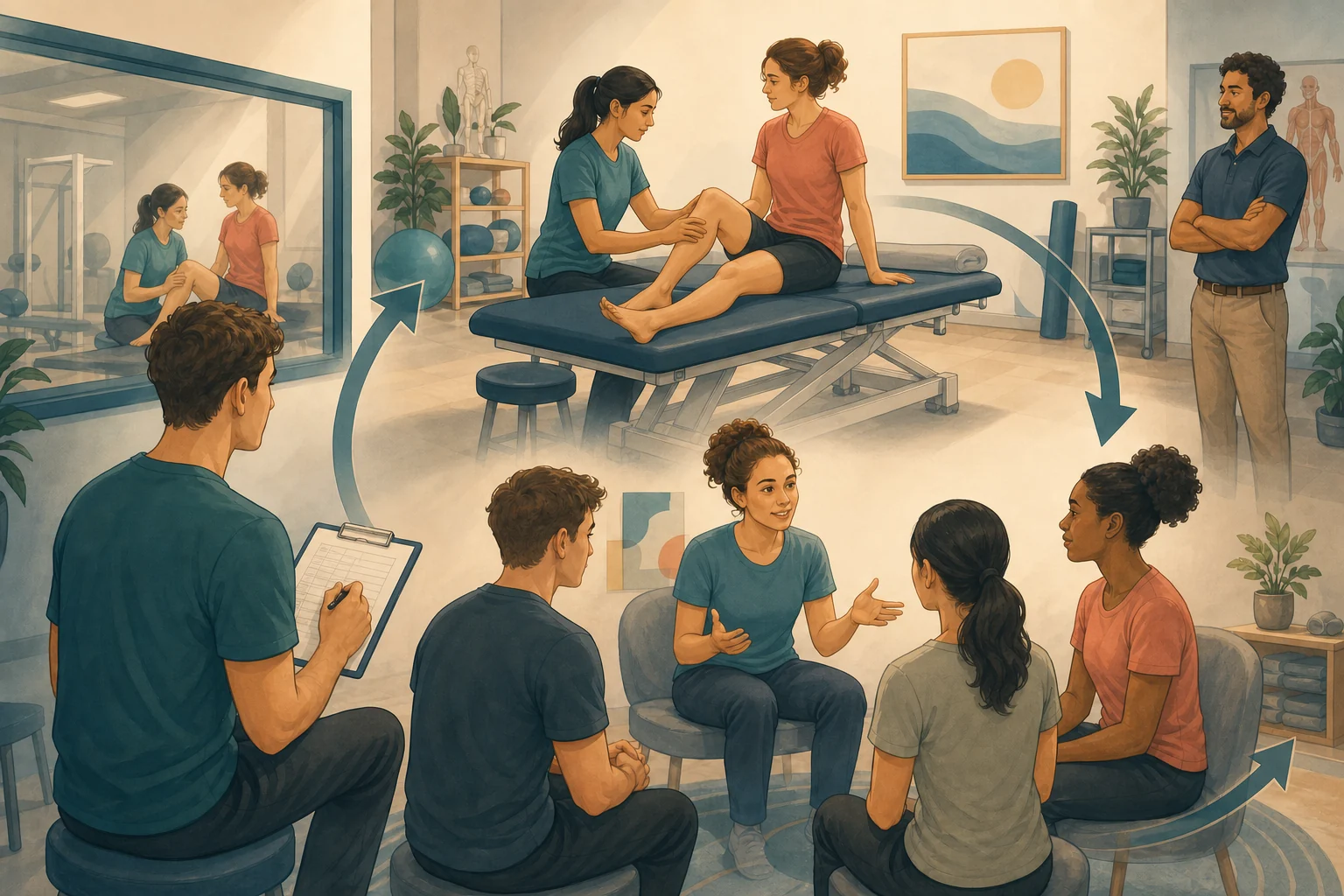
PROTOTYPE · IN DEVELOPMENTAI Tracking for OSPE & Student Training
Making sit-to-stand facilitation visible for practice, reflection and lecturer review.
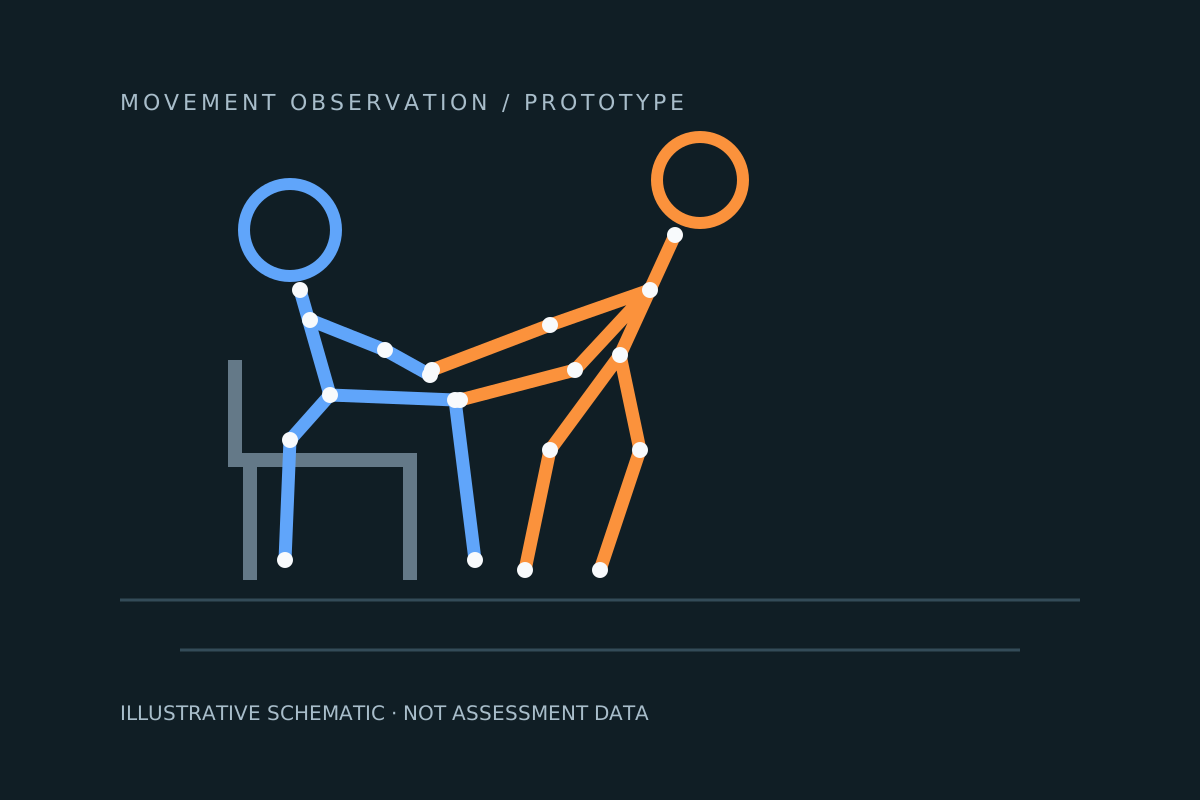
Students need specific feedback on how they position themselves and facilitate sit-to-stand with a standardised patient. A camera view can miss hands, confuse participants or hide important clinical context.
Physio Facilitation Lab is a native Mac prototype using existing Apple Vision body and hand tracking. It supports live camera observations and a two-video review workflow, projected joint measurements, visibility prompts and a draft written report. Lecturers identify the patient and student and confirm rubric marks; optional local language-model wording supplements the evidence report.
Observe student positioning, trunk and arm movement, and visible hand location; explain handling choices, review uncertainty and use lecturer feedback to plan another attempt.
Prototype in development. Live feedback logic and basic video processing have been checked, but live camera availability and two-person tracking require further testing. Educational effectiveness and agreement with examiner scores have not been established. Not available to launch or download from this website.
Signature work
PROTOTYPE · IN DEVELOPMENTBadminton Basic Body Analysis
Using visible movement evidence to review badminton technique, one task at a time.
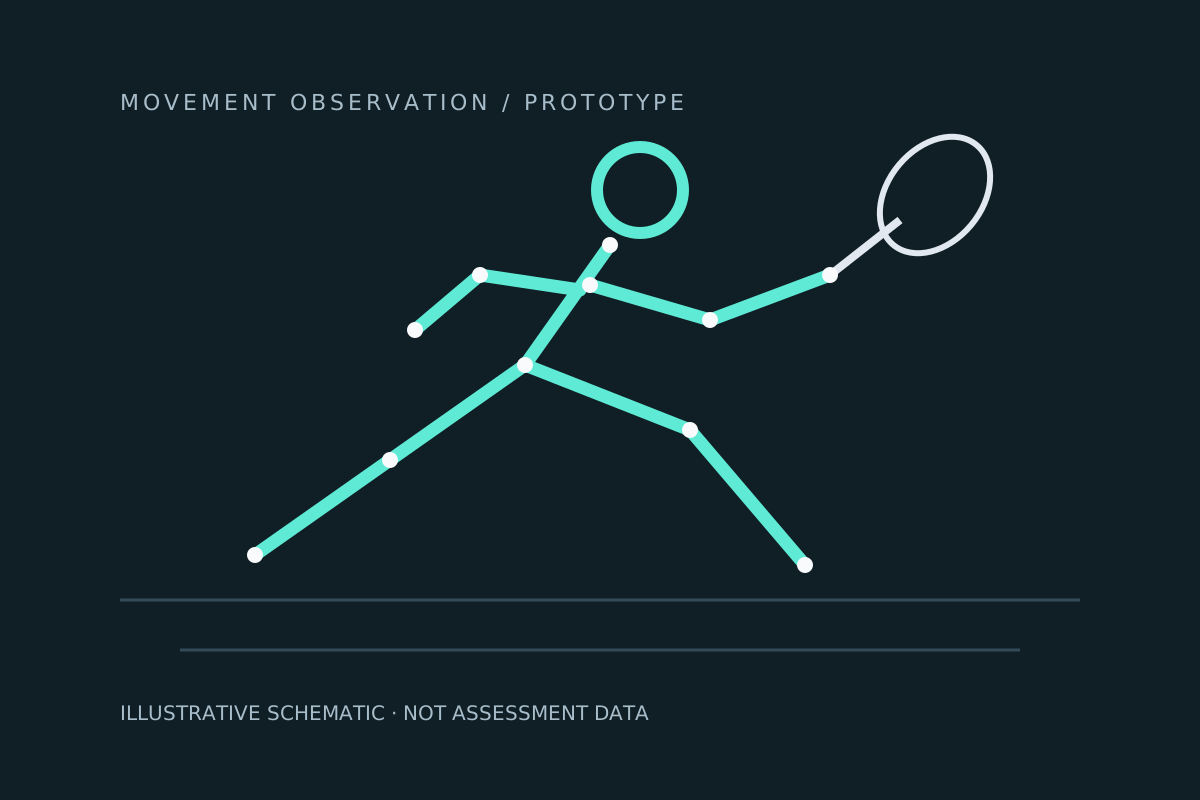
Players and educators need a practical way to replay movement and inspect body positioning without treating a skeleton overlay as proof of accurate biomechanics or injury risk.
Badminton Motion Lab is a native Mac prototype using existing Apple Vision models. Live webcam tracking displays body and hand landmarks and projected joint angles. Recorded-video analysis exports a skeleton overlay and joint-measurement CSV. Initial work focuses on clearly visible movements and manually confirmed lunge frames.
Review net-shot approach, lunge and recovery when visible; compare labelled left/right attempts, recognise missing landmarks and discuss projected movement with a coach or physiotherapist.
Working tracking prototype; fast badminton accuracy has not been validated. The first sample clip validated tracking only because it did not show a suitable full-body lunge. Smash-specific analysis and multi-camera fusion remain future work. Not available to launch or download from this website.