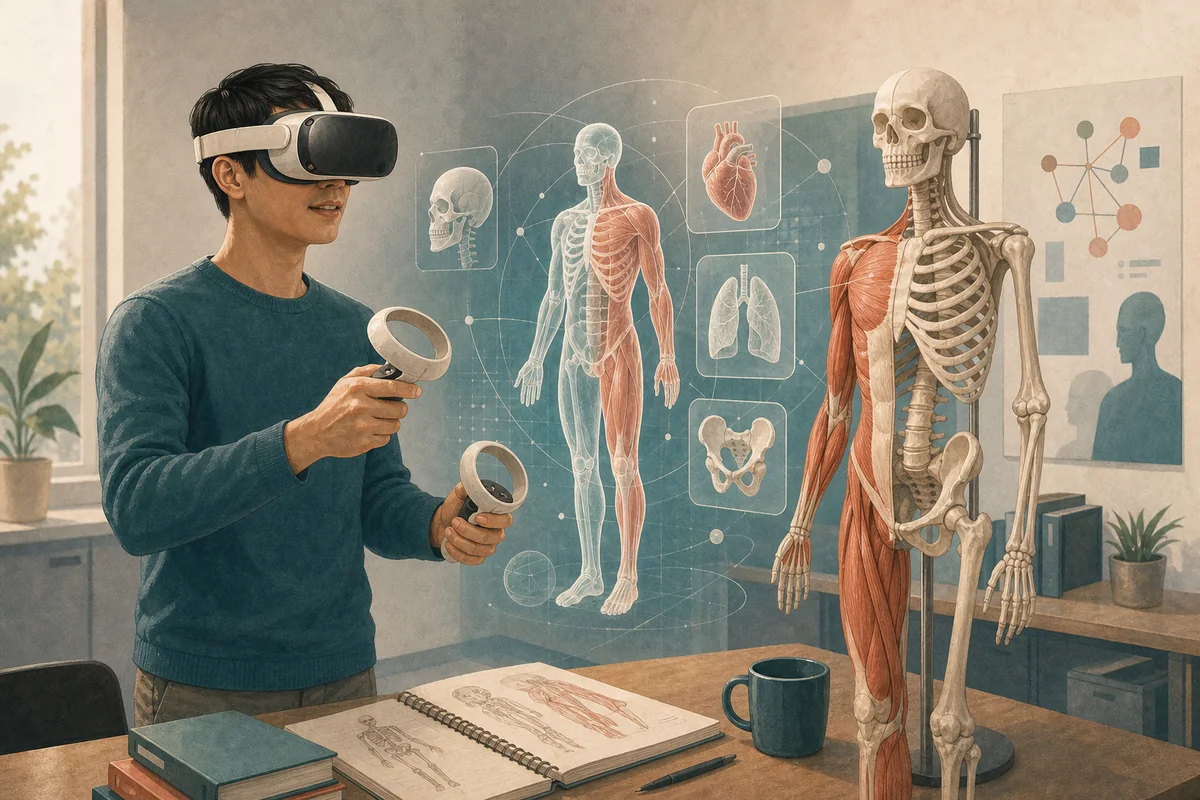
At the AMEE 2023 conference in Glasgow, I had an opportunity to try 3D Organon in virtual reality. The application presents an interactive three-dimensional anatomy model that learners can inspect from different angles and at different scales.
I had previously used Sharecare’s VR anatomy application, so the demonstration immediately raised useful questions about the similarities between the platforms and how each might support anatomy learning.
Questions for evaluation
I hope to test the application more systematically. A useful comparison should move beyond visual impact and examine usability, learning design and the quality of the student experience.
- How accurately and clearly are anatomical structures represented?
- How easily can a learner isolate, label and compare structures?
- Does the interaction promote spatial understanding rather than passive viewing?
- How comfortable and accessible is the experience for sustained learning?
- Does the educational value justify the cost and technical support required?