My journey
From movement to meaning
I am Tak Wing Yu, also known as Tommy. My name also appears in surname-first order as Yu Tak Wing (YU Tak Wing).
My work has moved from understanding how people move, to asking how future physiotherapists learn to think, decide, and care.

Academic profiles
Professional background
Selected appointments and clinical experience, alongside the qualifications below.
April 2024–present
Senior Lecturer in Physiotherapy
Saint Francis University, Hong Kong. Undergraduate teaching, curriculum coordination, assessment and educational development.
1 March 2024–28 February 2027
Research Fellow
Department of Physiotherapy, University of the Western Cape, South Africa.
December 2015–December 2023
Clinical Supervisor and Lecturer
University of the Western Cape, South Africa.
2015–December 2023
Private practice owner and physiotherapist
Yu Tak Wing Physiotherapist, South Africa. Community rehabilitation and patient education alongside teaching and clinical supervision.
Why physiotherapy
Physiotherapy first attracted me because it joins scientific understanding with practical human judgement. Movement can be measured, but good care still depends on listening, reasoning, adapting, and seeing the person rather than only the condition.
Why education
Teaching made the hidden work of clinical reasoning impossible to ignore. Students did not only need more information; they needed opportunities to explain decisions, test assumptions, make mistakes safely, and connect theory with the person in front of them.
Why virtual reality
VR offered a way to make difficult, spatial, or rarely encountered experiences more available. My interest is not in immersion for its own sake. It is in whether a designed experience helps students notice, practise, and understand something that other methods cannot show as clearly.
Why artificial intelligence
AI raises a different challenge. It can expand feedback and generate possibilities, but it can also hide weak reasoning behind fluent answers. I am interested in designs that make students think before consulting AI, question what it produces, and remain accountable for the final judgement.
The problem I am trying to solve
How can we design learning experiences that make clinical reasoning visible, preserve meaningful human judgement, and use technology only where it adds genuine educational value?
Start with the learner
Define the competence, misconception, or barrier before choosing a tool.
Make thinking visible
Ask students to explain, compare, defend, and revise their decisions.
Design for transfer
Connect classroom activity to the uncertainty and responsibility of professional practice.
Evaluate honestly
Treat friction, failure, and unintended consequences as evidence for the next design.
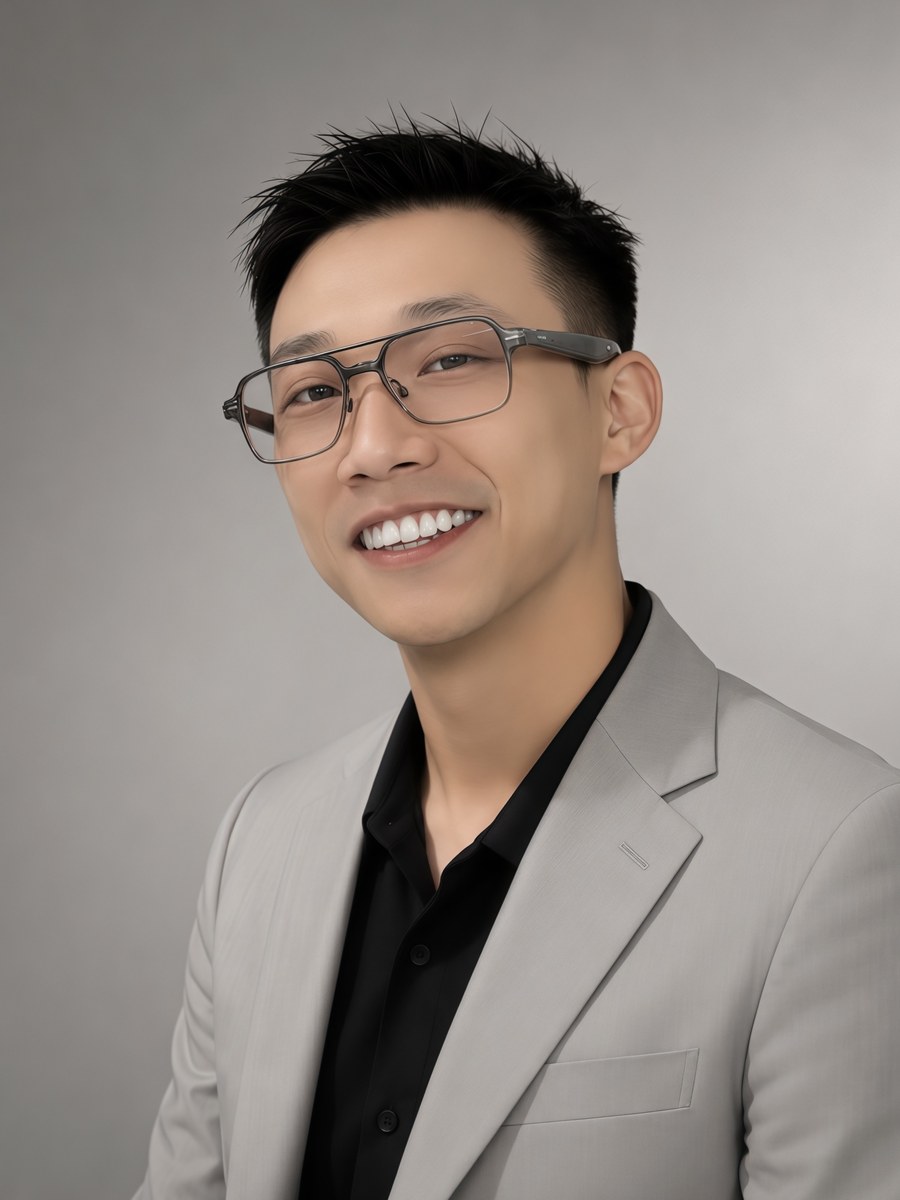

Profile
Current appointment
- Senior Lecturer in Physiotherapy
- School of Health Sciences
- Saint Francis University, Hong Kong
- Research Fellow
- Community and Health Sciences
- University of the Western Cape
- Doctor of Philosophy in Physiotherapy
University of the Western Cape, South Africa · 2026 - Master of Science in Physiotherapy
University of the Western Cape, South Africa · 2017 - Bachelor of Science (Honours) in Physiotherapy
University of the Western Cape, South Africa · 2013
PhD thesis: Development of Guiding Principles for the Use of Virtual Reality to Support Teaching and Learning for Health Professions Students
- Registered Physiotherapist in Hong Kong
- Registered Physiotherapist with the Health Professions Council of South Africa (HPCSA)
- Registered Physiotherapist with the UK Health and Care Professions Council (HCPC)
Recognised for student-centred teaching, educational innovation, curriculum development, and the purposeful integration of technology in physiotherapy education.