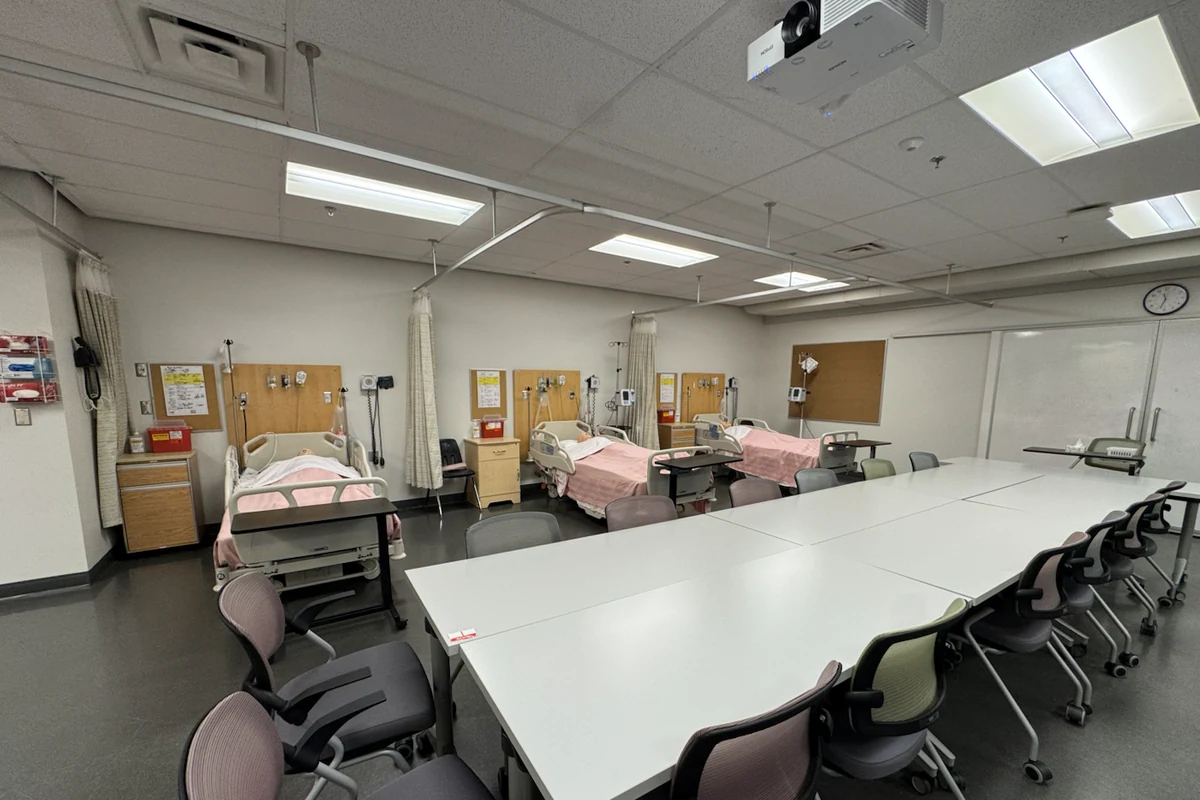
A well-equipped simulation room is impressive. Beds, monitors, clinical equipment and a realistic environment can create an immediate sense of possibility. Yet the room itself does not produce learning. It is an educational resource whose value depends on what happens before, during and after the scenario.
Standing in an empty simulation room reminded me that realism is only the beginning. The more important work is designing an experience that helps learners notice, decide, communicate, act and reflect.
Start with the capability, not the room
Simulation design should begin with the capability students need to develop. Is the priority clinical reasoning, communication, teamwork, escalation, technical skill or a combination of these? The answer shapes the scenario, the information provided, the roles assigned and the evidence of learning that educators should observe.
Without this alignment, a realistic room can become a stage for activity rather than learning. Students may remain busy without understanding which decisions mattered or how their actions relate to professional practice.
Preparation shapes participation
Learners need enough orientation to engage with the educational problem rather than spend the entire session decoding the environment. This includes knowing the purpose, boundaries, available equipment, expected roles and how the fiction of the scenario should be treated.
Psychological safety is equally important. Simulation may expose uncertainty in front of peers. Students need to know that the aim is learning, that mistakes will be examined respectfully and that speaking up is part of safe professional practice.
The educator is designing attention
A scenario cannot reproduce every detail of clinical care. Educators therefore make choices about what learners should notice and what information will become available. Patient cues, changes in observations, prompts from another professional and periods of silence can all direct attention.
The challenge is to provide enough information for meaningful reasoning without scripting the correct response. Good facilitation protects the learning intention while allowing students to reveal how they interpret uncertainty.
Debriefing turns activity into learning
The scenario creates experience; the debrief helps learners interpret it. A useful debrief moves beyond listing what went well and what went wrong. It examines what participants noticed, how they formed a judgement, why communication succeeded or failed, and what they would do differently in another context.
Observation roles also need a purpose. A student who is not directly managing the case can track communication, safety checks or decision points, then contribute evidence to the discussion. Participation should be designed, not assumed.
Before the first learner enters
- Define the intended learning outcomes and observable evidence.
- Decide what learners need to know before the scenario begins.
- Clarify roles for participants and observers.
- Plan cues that support reasoning without giving away the answer.
- Create a psychologically safe briefing and debriefing structure.
- Check that equipment, staffing and time support the intended activity.
- Provide a route from reflection to another opportunity for practice.
The room becomes valuable through design
Simulation facilities can support powerful learning, but their educational value is not measured by how closely the room resembles a hospital ward. It is measured by whether students are helped to think, act, communicate and reflect in ways that prepare them for practice.
The room is the beginning. Learning emerges from the alignment of purpose, participation, facilitation, feedback and another chance to improve.