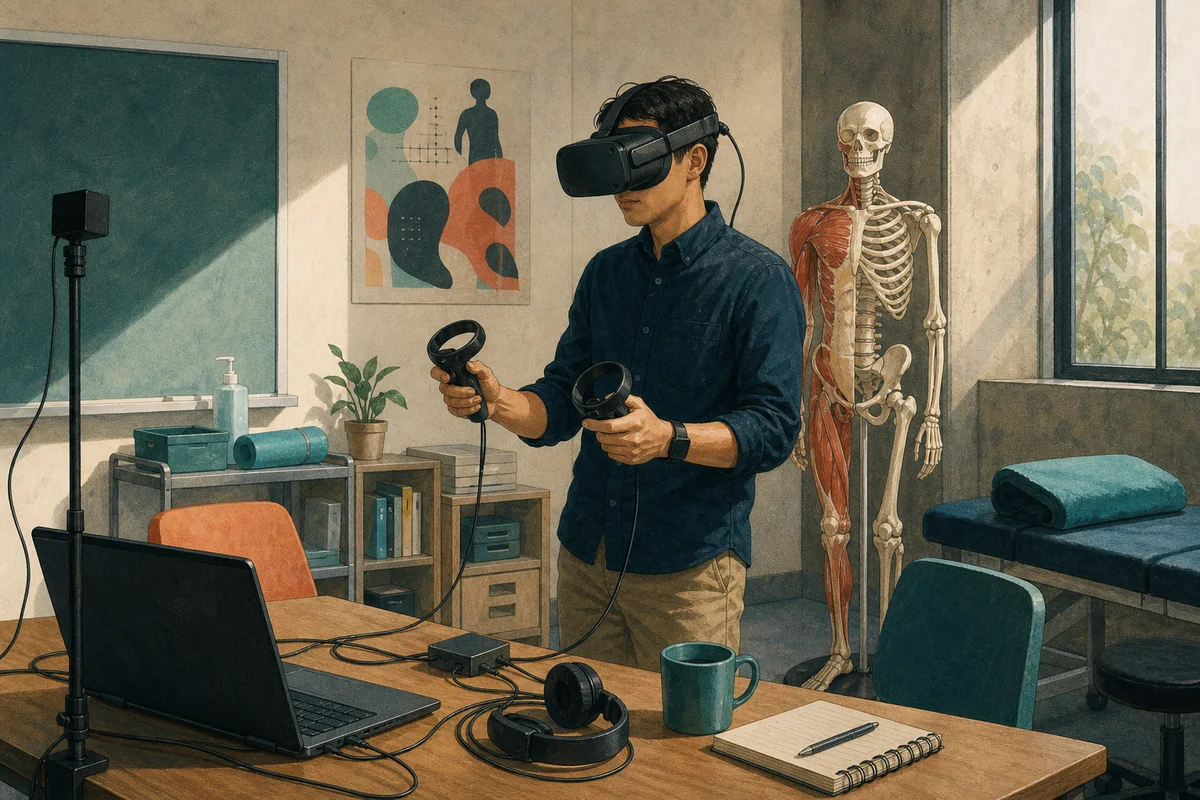
In 2020, I paired an Alienware M15 R2 laptop with an HTC VIVE Cosmos headset. At the time, the combination represented a capable route into PC-based virtual reality, but setting it up required considerably more preparation than a modern standalone headset.
The equipment
- Intel Core i7-9750H processor.
- 16 GB of RAM and a 256 GB solid-state drive.
- NVIDIA RTX 2070 graphics.
- HTC VIVE Cosmos headset and controllers.
Setup experience
The first challenge was connectivity. I needed the correct Mini DisplayPort connection, and a suitable adapter was not readily available locally. Once the hardware was connected, I still had to install software, update drivers, prepare a safe physical area and configure the virtual environment.
The process took approximately three and a half hours, including downloads. Tracking was sensitive to lighting, and several settings needed adjustment before the experience felt reliable.
Was it worthwhile?
Yes. Once configured, the system provided an impressive and engaging VR experience. However, the time and technical confidence required would be a significant barrier in a busy teaching environment.
This experience helped me appreciate why standalone headsets became so influential. For educational deployment, ease of setup, repeatability and staff support can matter just as much as graphical performance.