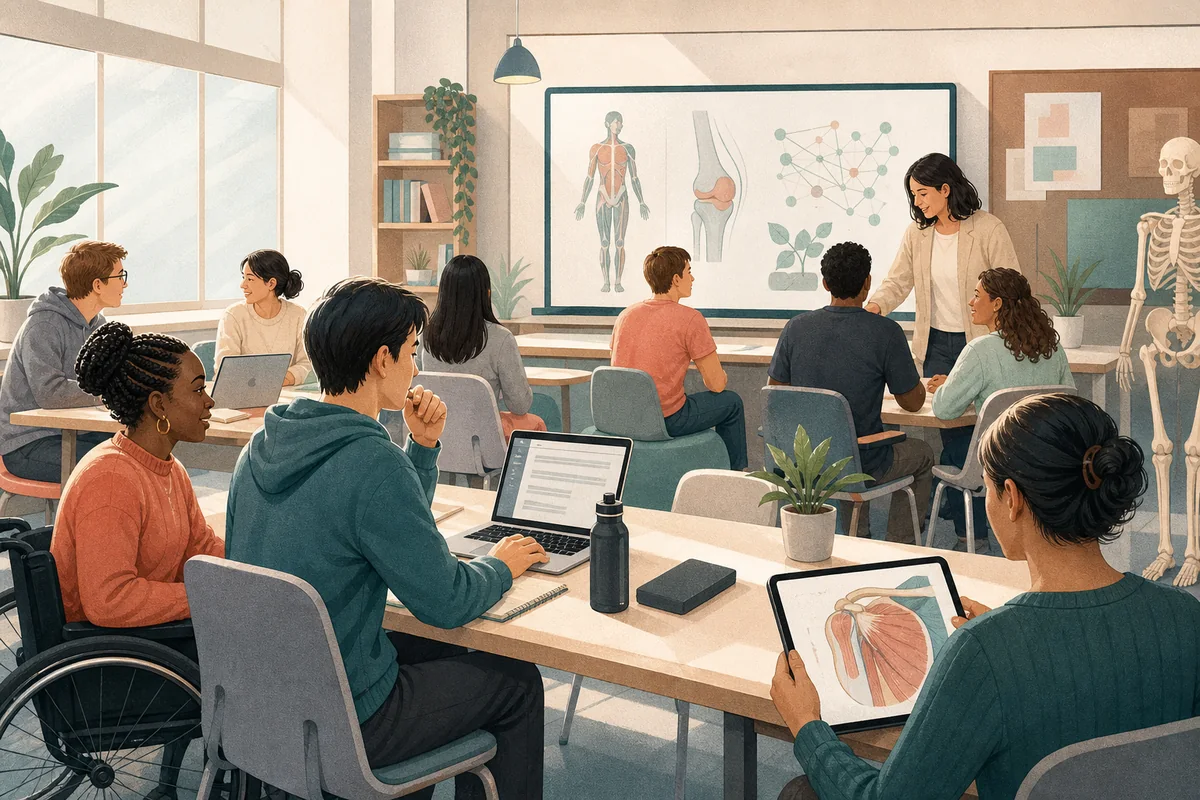
Inclusive education begins with the recognition that students bring different strengths, experiences and support needs to the classroom. Special educational needs may relate to mobility, sensory access, communication, attention, processing or specific learning differences such as dyslexia.
The lecturer’s role is not to lower academic standards. It is to remove avoidable barriers so that students have a fair opportunity to demonstrate the required learning outcomes.
Practical approaches
- Work with the student and the university’s disability or inclusion service to understand agreed adjustments.
- Provide materials in accessible formats and share key information in advance where possible.
- Use clear structure, plain instructions and more than one way of presenting important concepts.
- Offer appropriate flexibility in participation and assessment while preserving the intended learning outcomes.
- Check that digital resources, images, videos and learning platforms are accessible.
Partnership and review
Students are often the best source of information about what enables them to learn. Regular, respectful communication helps lecturers identify what is working and what needs to change. Adjustments should be reviewed rather than treated as a one-off administrative task.
Collaboration is equally important. Lecturers should work with colleagues, learning-support staff and relevant specialists instead of attempting to solve every issue alone. Professional development in inclusive teaching can improve practice for the whole class, not only for students with documented needs.
An inclusive learning culture
A genuinely inclusive environment allows students to ask for support without embarrassment. When accessibility is built into course design from the beginning, fewer students need to request individual exceptions and everyone benefits from clearer teaching.