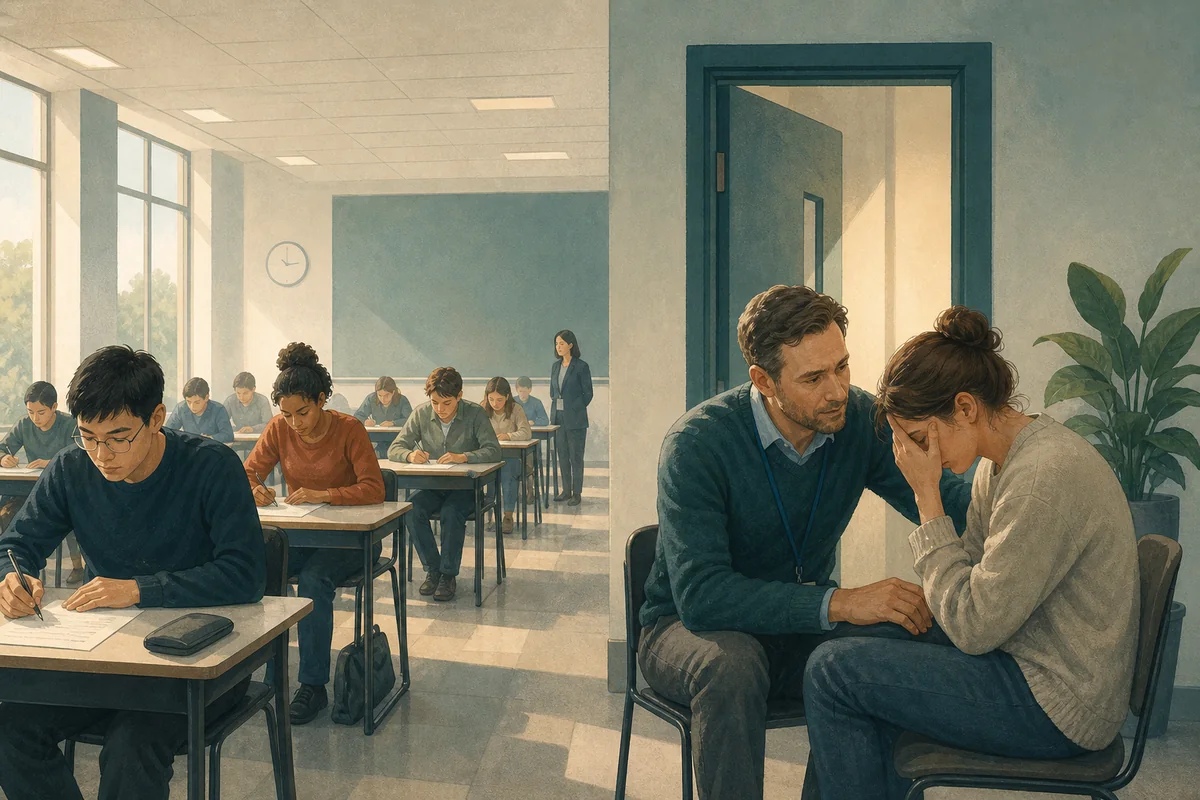
Examinations can intensify anxiety and, on rare occasions, a student may experience an acute mental health crisis. Lecturers must respond with compassion while protecting the safety, privacy and fairness of everyone involved.
A crisis should not be treated as misconduct simply because it disrupts an assessment. At the same time, academic decisions should not be made under pressure during an emergency. Immediate care and later assessment decisions are separate matters.
Recognising distress
- Visible panic, severe agitation or an abrupt emotional change.
- Difficulty communicating coherently or following simple instructions.
- Statements suggesting hopelessness, self-harm or immediate danger.
- Behaviour that creates a safety concern for the student or others.
Immediate response
- Remain calm, speak clearly and avoid crowding the student.
- Follow the institution’s emergency and safeguarding procedures.
- Contact the designated health, counselling, security or emergency service.
- Protect the other students’ assessment conditions, moving them only if necessary.
- Do not promise a mark, pass or particular academic outcome.
After the incident
Document the facts promptly and confidentially, including the actions taken and the people contacted. Refer the academic consequences to the appropriate assessment or mitigating-circumstances process rather than deciding them alone.
Follow up through the proper student-support channels and review whether staff training, room arrangements or examination procedures could be improved. A well-prepared response protects both student wellbeing and academic integrity.