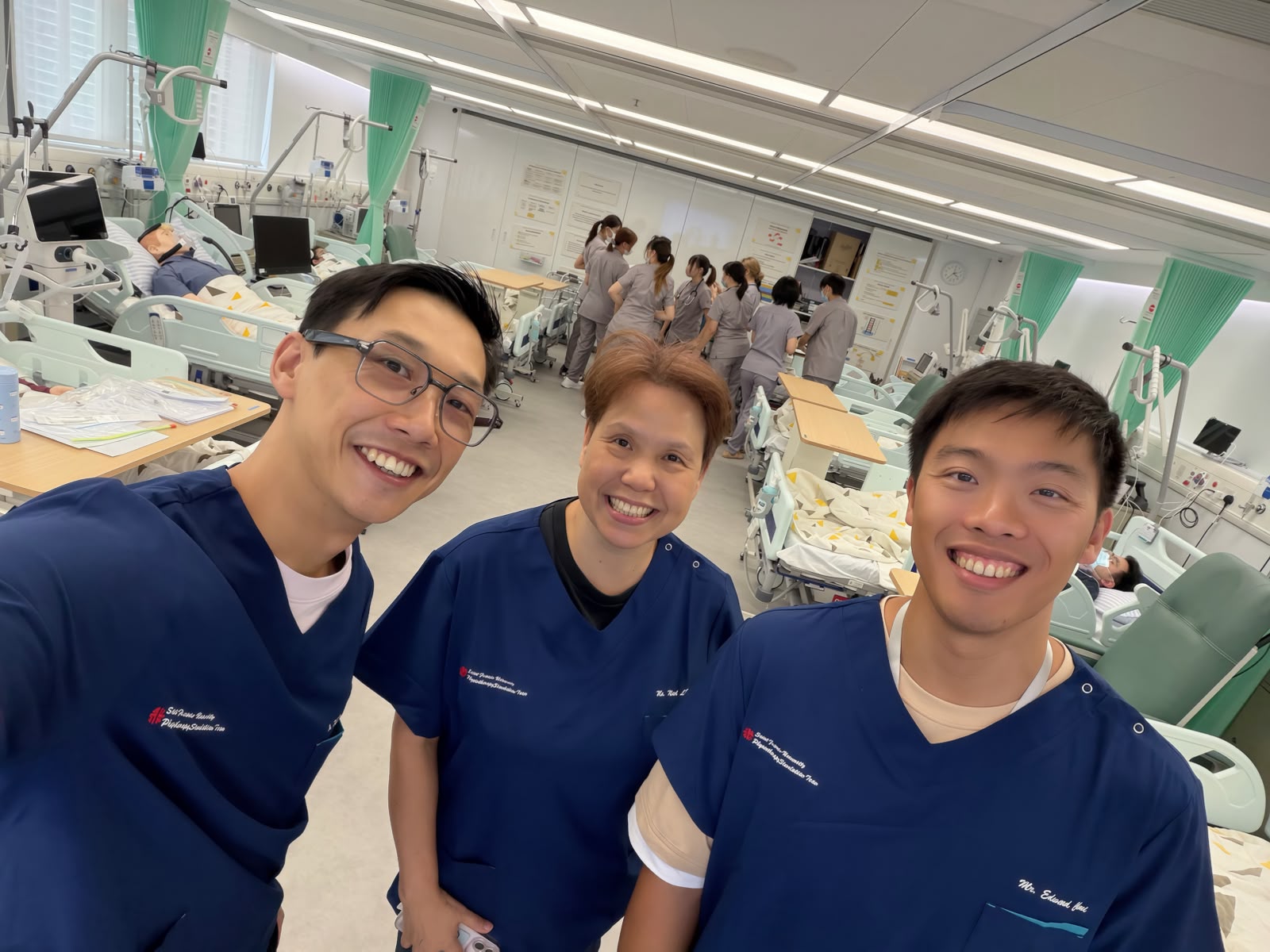
A simulation does not finish when the scenario stops. The conversation afterwards can reveal why a student chose a test, missed a cue, changed a plan or hesitated before moving a patient. Yet once that conversation ends, much of its detail depends on what each person remembers.
During the BPHY304 Cardio II simulation laboratory on 15 October, I tried adding a further step: using AI to consolidate feedback after the human debrief. The aim was to preserve the learning already generated in the room and turn it into a written resource that students could return to.
Putting the clinical encounter back together
In a practical class, students may practise an examination technique or treatment in isolation. In the simulation, those elements had to work together. Students needed to organise the encounter, gather relevant information, decide what to examine, select an intervention, communicate with the patient and team, and manage equipment and safety as the situation developed.
That integration matters to me. Knowing how to perform a technique is only part of the task. Students also need to explain why it is appropriate at that moment, what they expect to learn and how the finding would change their next decision.
The debrief gave us space to explore that reasoning. It brought together lecturer and facilitator observations, supporting-staff feedback and students’ reflections on what they were trying to do.
The conversation came first
I would describe the additional stage as AI-assisted debrief consolidation. The live debrief remained a human conversation: asking follow-up questions, exploring uncertainty, responding to emotions and checking the assumptions behind an action.
AI was introduced afterwards. I brought together notes, observations, student reflections and material from the recorded feedback discussion, then used AI to help organise recurring points into themes and take-home messages. I reviewed the synthesis for accuracy and context. A student-facing written feedback resource is being prepared from that work.
This sequence is central to the design:
- Perform: work through the simulation encounter.
- Debrief: discuss decisions and reasoning with people who shared or observed the experience.
- Consolidate: bring the different feedback sources together with AI assistance.
- Review: check the synthesis, restore context and remove unsupported interpretations.
- Reapply: use the reviewed feedback to plan a change for the next encounter.
Six themes worth carrying forward
The consolidation grouped the feedback into six broad themes. These are shared learning priorities, rather than a public account of any individual’s performance.
- Clinical flow and preparation: organise the encounter and equipment, and know what comes next and why.
- Purposeful subjective examination: connect questions to the patient’s concerns, risks, function and goals.
- Focused objective examination: let the history guide the examination; explain how a test result could change a decision.
- Treatment and adaptation: connect findings, problems, goals and treatment, with a reasoned starting level and options for progression or regression.
- Safety and reassessment: prepare for movement, anticipate monitoring needs and decide what would prompt stopping or reassessment.
- Communication and teamwork: maintain a shared clinical picture, explain the plan, protect dignity and translate feedback into action.
The useful question is what a learner will do differently. A comment about preparation, for example, can become a specific commitment to check equipment and the environment before the next mobilisation task. The precise action still needs to fit the scenario and be discussed with the facilitator.
From individual comments to collective learning
Different people notice different things. A facilitator may focus on the reasoning behind an assessment. Supporting staff may notice the organisation of equipment. A student may describe an uncertainty that was invisible to the observer.
I wanted a way to bring those perspectives together without reducing them to a single voice or identifying a student through an account of a mistake. A reviewed cohort summary can express a general learning principle while individual feedback stays within the appropriate teaching relationship.
AI can help cluster repeated points and draft a clearer structure. It can also flatten differences, confuse an observation with an interpretation, or make a tentative comment sound certain. A tidy summary therefore needs to be checked against what was actually said and observed.
What the educator still has to judge
A transcript does not contain the whole encounter. It may miss a gesture, an explanation offered later, a change in the patient’s presentation or the reason a facilitator intervened. Speaker attribution may also be wrong. I need to ask whether each theme is supported, whether its wording is fair and whether it makes educational sense in context.
The same care applies before material reaches an AI service. Recording and processing must follow the relevant institutional arrangements, with a clear purpose and appropriate information for participants. Names, identifiers and unnecessary personal details should be removed, and only the material needed for the task should be used in an approved environment. This reflection does not publish the recording, transcript or individual feedback.
Responsibility for the final teaching resource remains with the educator. AI does not award a mark, determine clinical competence or replace the opportunity for a student to question the feedback.
The next attempt will matter more than the summary
I have not established that this approach improves learning or saves time. A well-organised document is an output; whether students engage with it and change their practice is a further question.
Next time, I would give facilitators a common observation template and distinguish what happened from what we think it means. I would ask students to record one strength and one intended change after the debrief. Before releasing the consolidated resource, I would check each theme against the original notes and the intended learning outcomes.
A short follow-up could then ask:
- Which feedback point is most relevant to your own practice?
- What will you change?
- How will you demonstrate that change in the next simulation?
Those responses, and what happens in a later encounter, would help me judge whether the feedback cycle is useful. Any formal evaluation would also need appropriate ethical and data-governance arrangements.
Making the learning last
This session connects with my ongoing interest in learning through different simulation roles and in what different perspectives make visible.
The simulation created an experience. The human debrief helped us make sense of it. AI offered assistance with organising the feedback afterwards. Its value will depend on the review, reflection and further practice that surround the written summary.
What I want students to carry away is more than a record of what happened: a clear, justified change they can bring to the next patient encounter.
Teaching reflection based on my notes from the Cardio II simulation laboratory on 15 October 2026. This is an account of an emerging teaching workflow, not a report of evaluated learning outcomes.