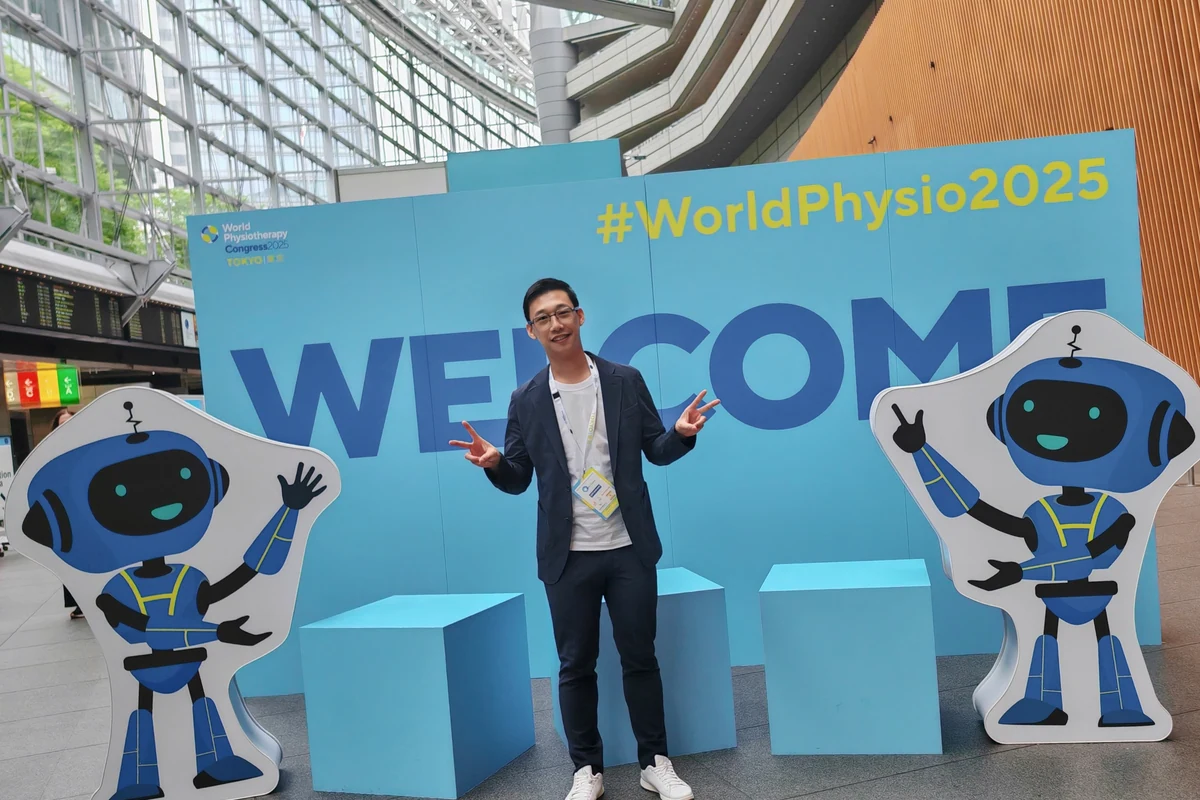
Academic conferences can be energising. For a few days, conversations move quickly, familiar assumptions are questioned and projects that usually live in separate institutions are placed beside one another. The challenge begins when the programme closes and ordinary work resumes.
Attending the World Physiotherapy Congress 2025 in Tokyo prompted me to ask a practical question: if a conference does not change anything I do afterwards, what exactly have I brought home?
A conference is more than information
No one can absorb every presentation, poster and conversation. Trying to collect everything usually produces an impressive folder and very little change. I find it more useful to look for questions that unsettle my current thinking, approaches that clarify a problem, and conversations that reveal how another context has addressed it.
The value is therefore not simply access to information. Most information can be found later. The distinctive value lies in comparison, dialogue and the chance to test an idea with people who understand the problem differently.
From notes to commitments
Conference notes often mix useful evidence with passing inspiration. Before treating every interesting idea as a new project, I need to ask where it fits. Does it address a problem my students or colleagues actually experience? What would need to change in the curriculum, assessment or learning environment? What evidence would show that the change helped?
A useful post-conference habit is to convert selected notes into small commitments. One idea may become a paper to read carefully. Another may become a question for a colleague, a revision to a teaching activity or a pilot that is deliberately kept small enough to evaluate.
Conversation is part of scholarly work
Some of the most valuable conference moments do not happen at the lectern. A short conversation can expose a hidden assumption, identify a collaborator or show that a local challenge is shared elsewhere. These encounters are not separate from research; they help shape which questions are worth pursuing and how a study may be understood beyond its original setting.
The same applies when presenting my own work. Questions from an audience test whether the educational problem, method and implications are clear. A presentation is not merely dissemination of a finished product. It is another stage of inquiry.
What should change on Monday?
- Choose one question that deserves further reading rather than saving every slide.
- Identify one teaching or research assumption that now needs to be reconsidered.
- Contact one person whose work connects meaningfully with an existing problem.
- Translate one promising idea into a small, observable next step.
- Decide what not to pursue so that novelty does not become an expanding workload.
Bringing the conference home
A conference can broaden a professional network and renew enthusiasm, but its deeper value appears after the event. It becomes visible when a question is sharper, a lesson is redesigned, a collaboration continues or a research decision becomes more defensible.
The photograph marks that I was there. The more important evidence is what changes when I return.